-
A threshold between city, landscape and sea
Manly SLSC
The Manly Surf Life Saving Club is an iconic Australian institution that formed over a century ago on one of Australia’s iconic city beaches. Lifesaving is a key part of Australian culture, consisting of an extraordinary network of volunteers who patrol beaches and regularly save lives.
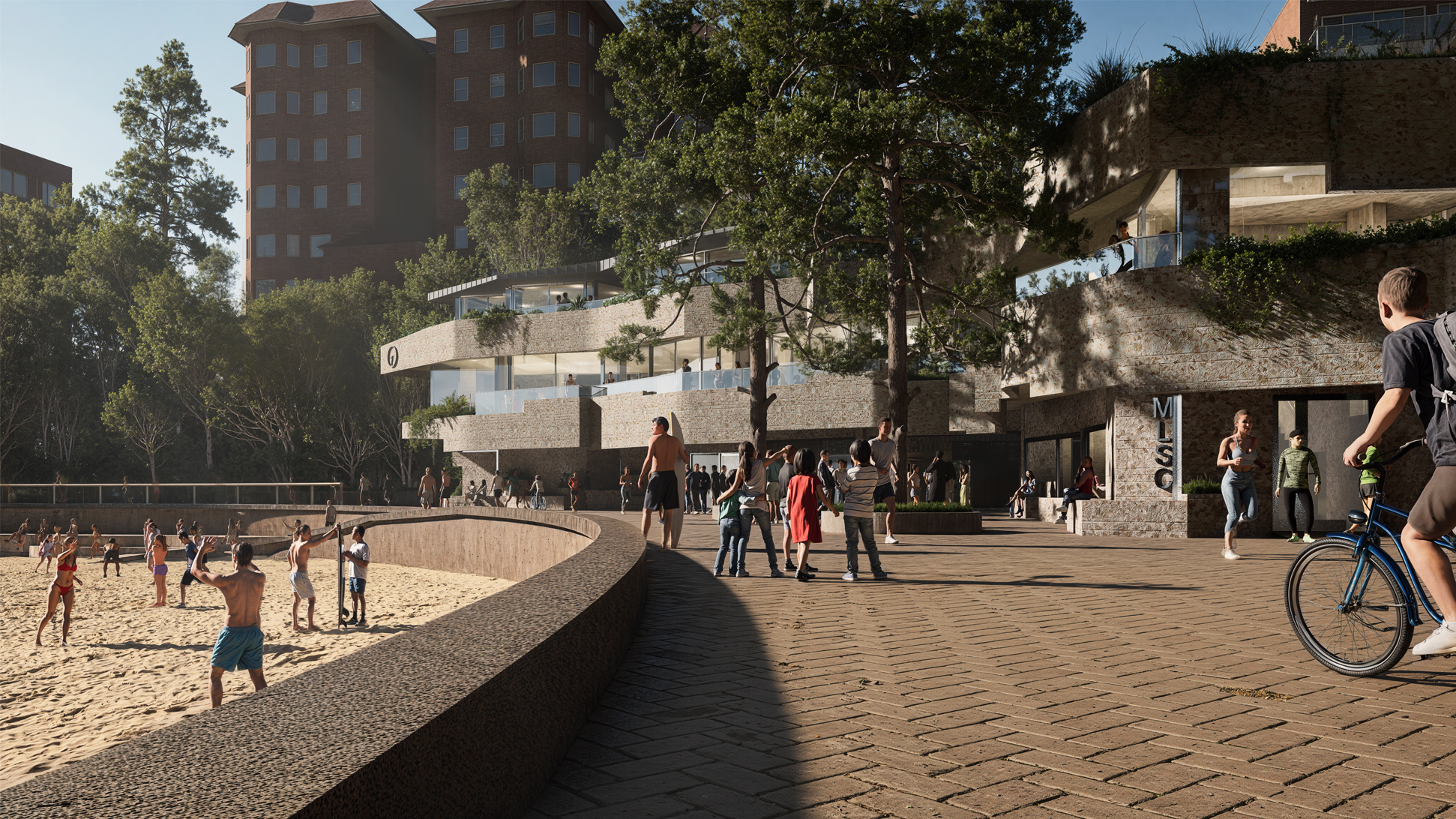
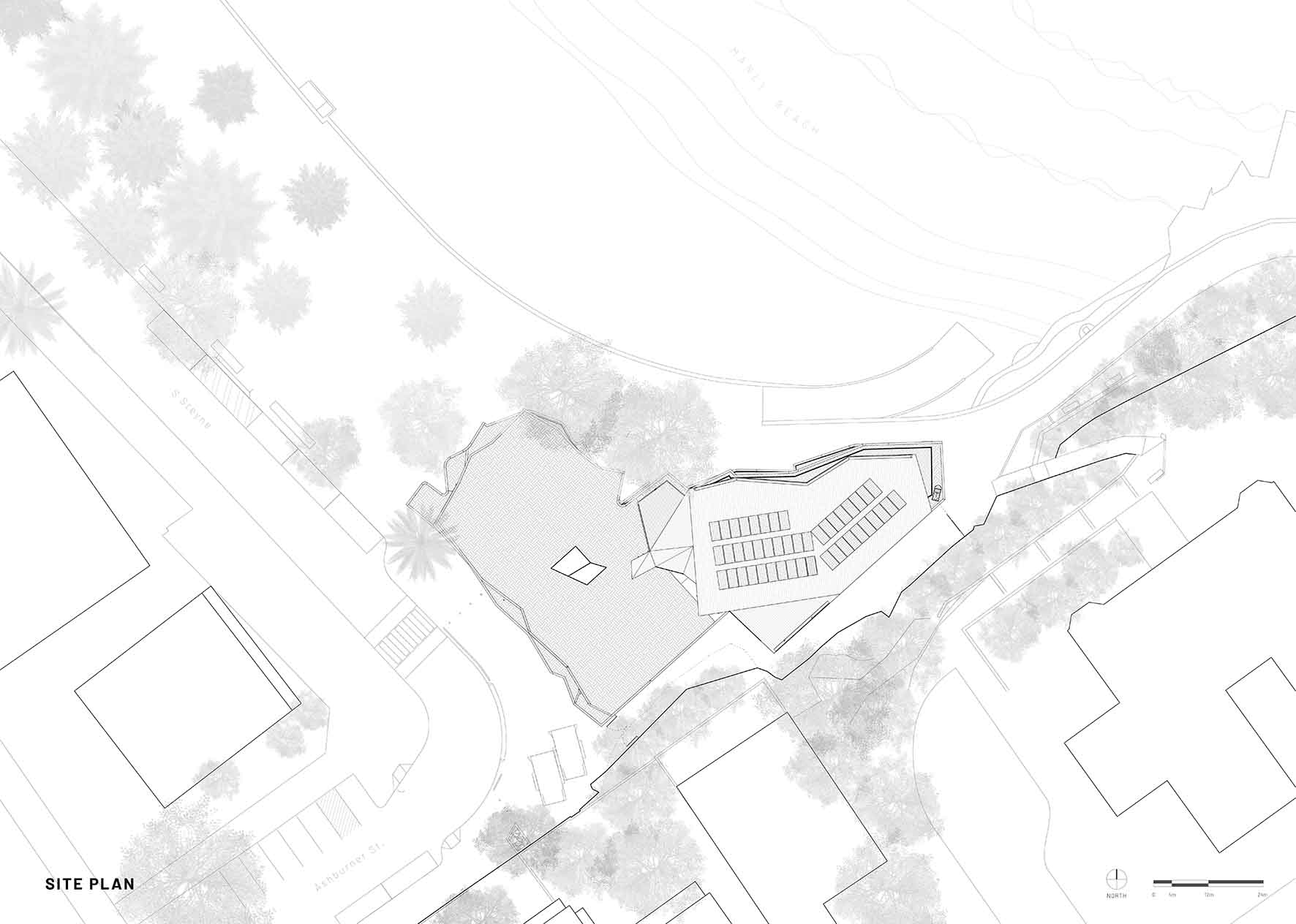
Surf Life Saving Clubs are inevitably housed on the beaches they patrol. Club buildings have to withstand harsh environments and navigate complex demands at both a functional level and urban level. The complexity of these demands is at its most extreme in Manly, where the site is a tiny slice of land located against a cliff face and at the interface of city and sea. This slice of waterfront needs to house facilities for training, supporting and managing one of the largest Clubs in the country and who patrol the second busiest beach in Australia.
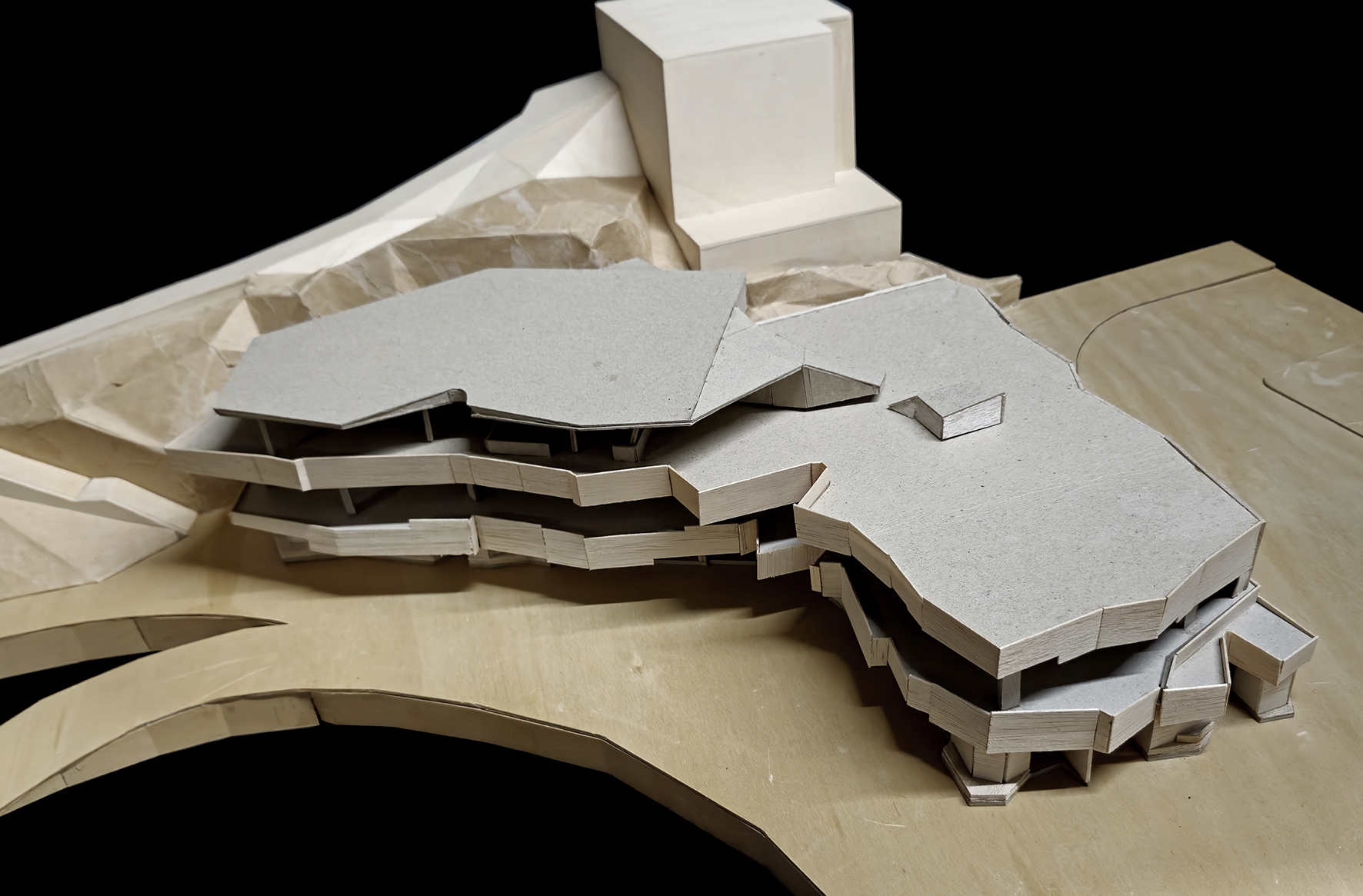
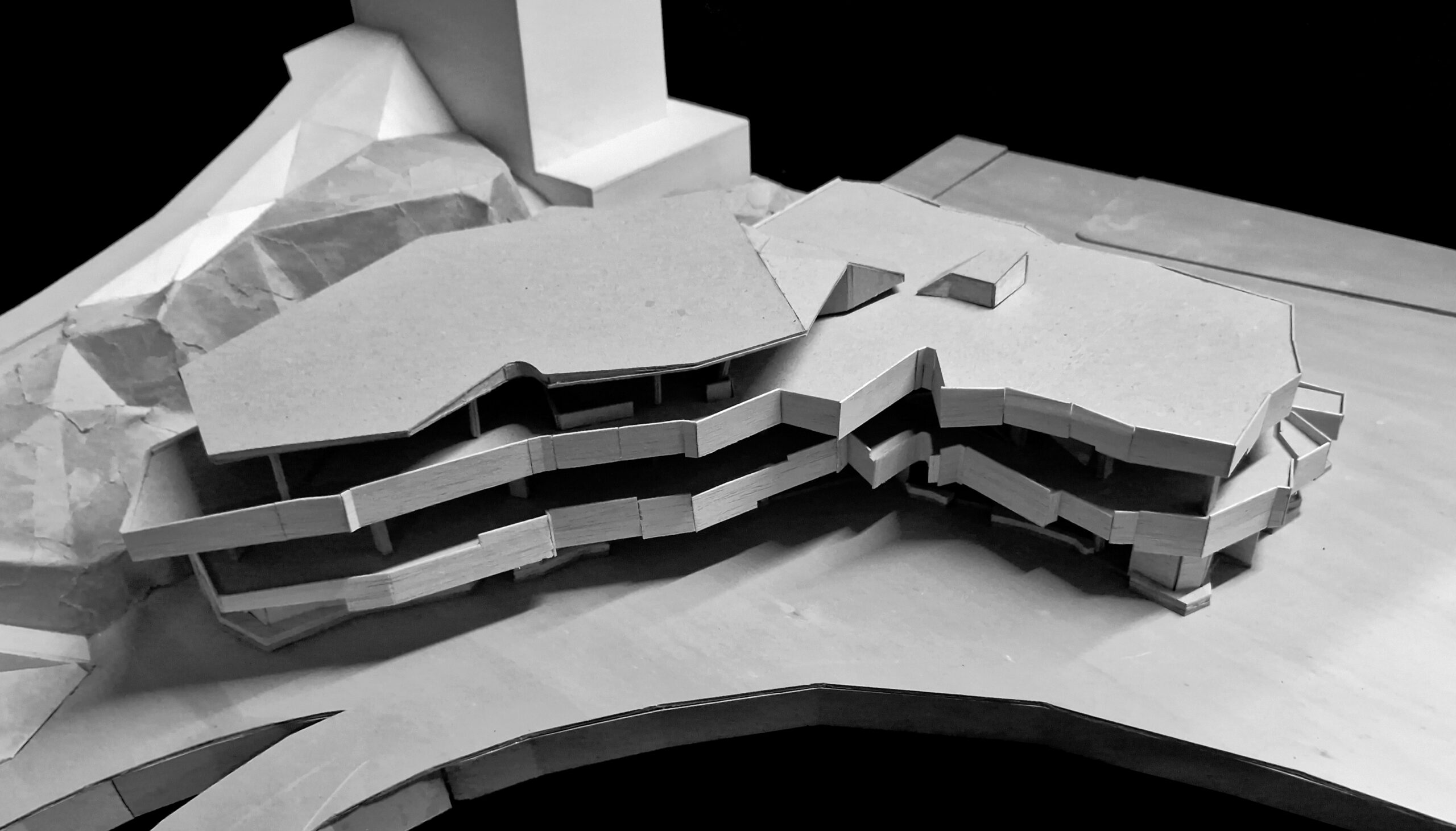
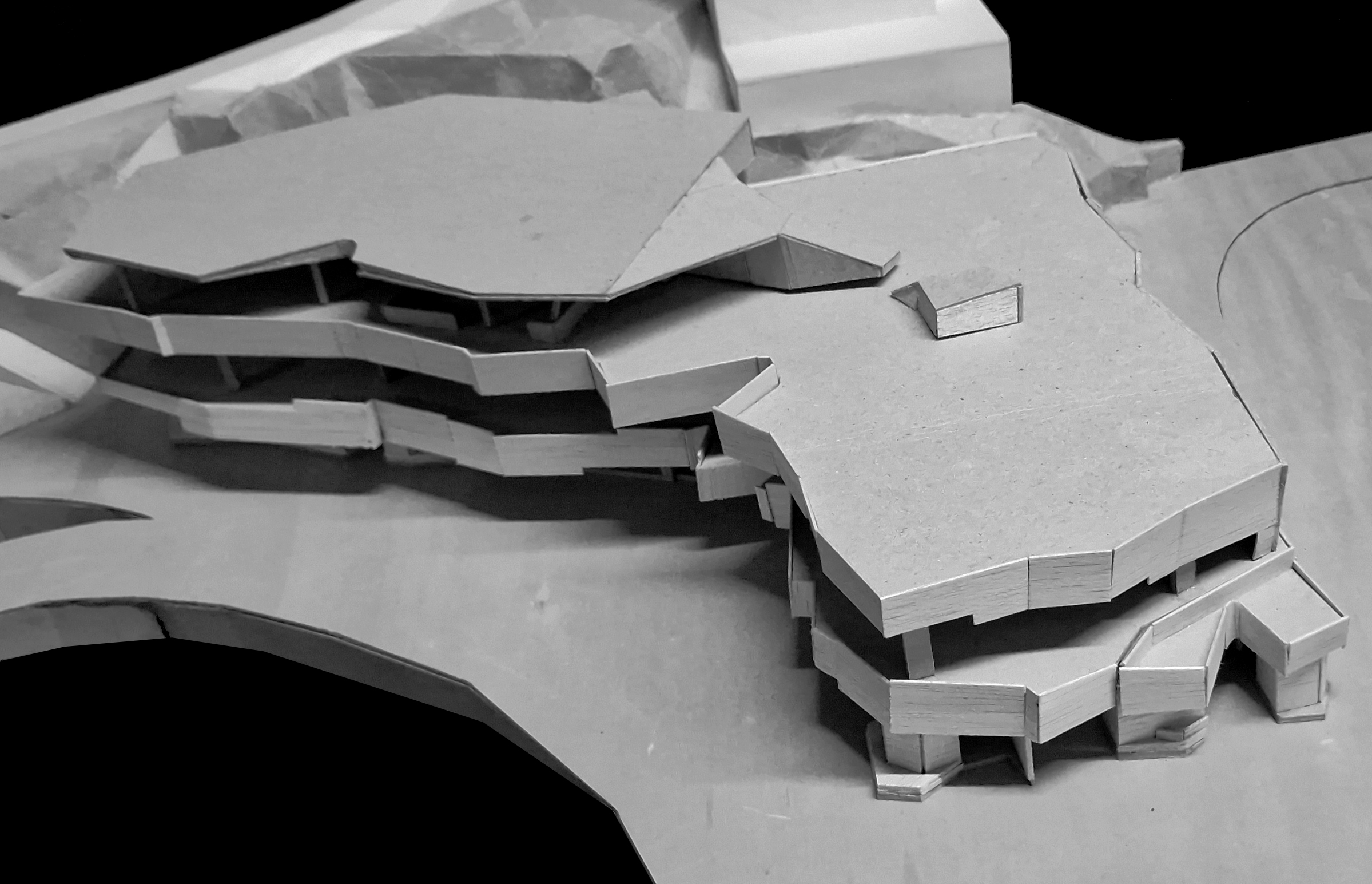
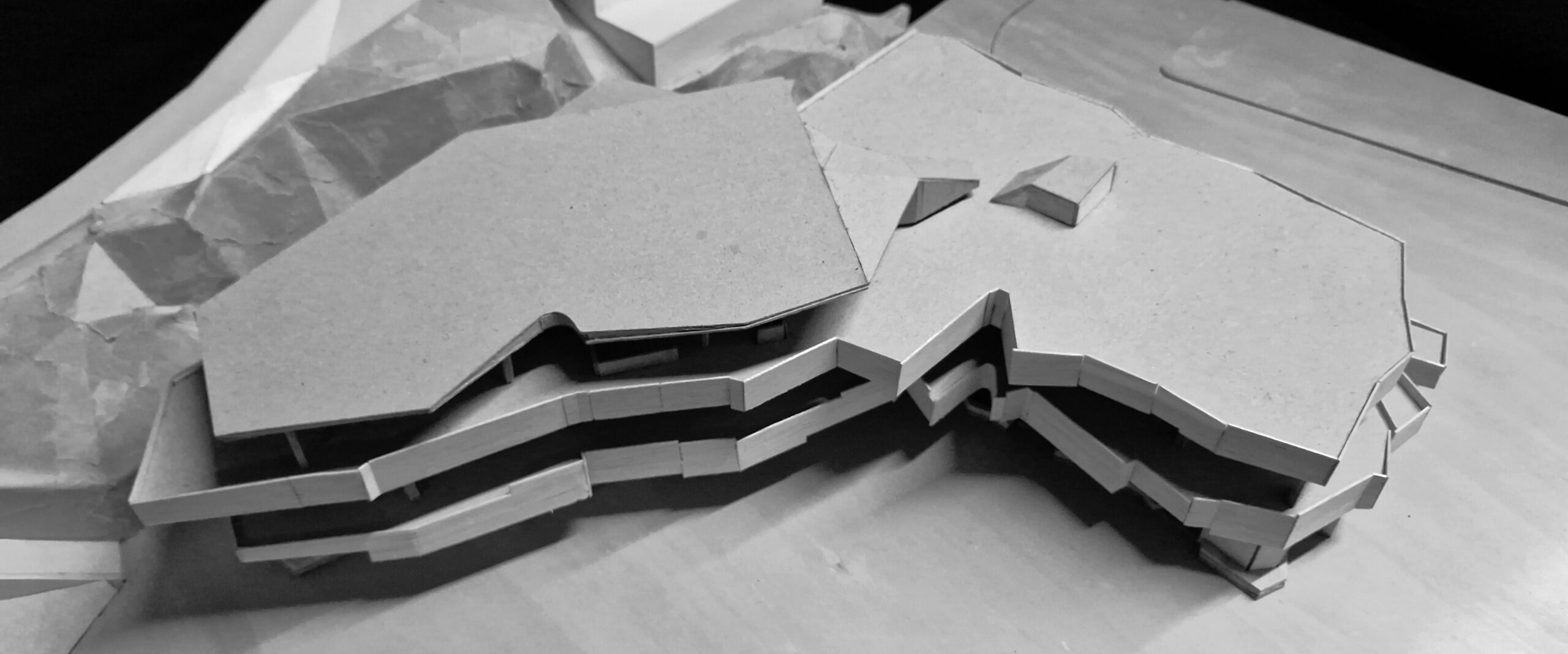
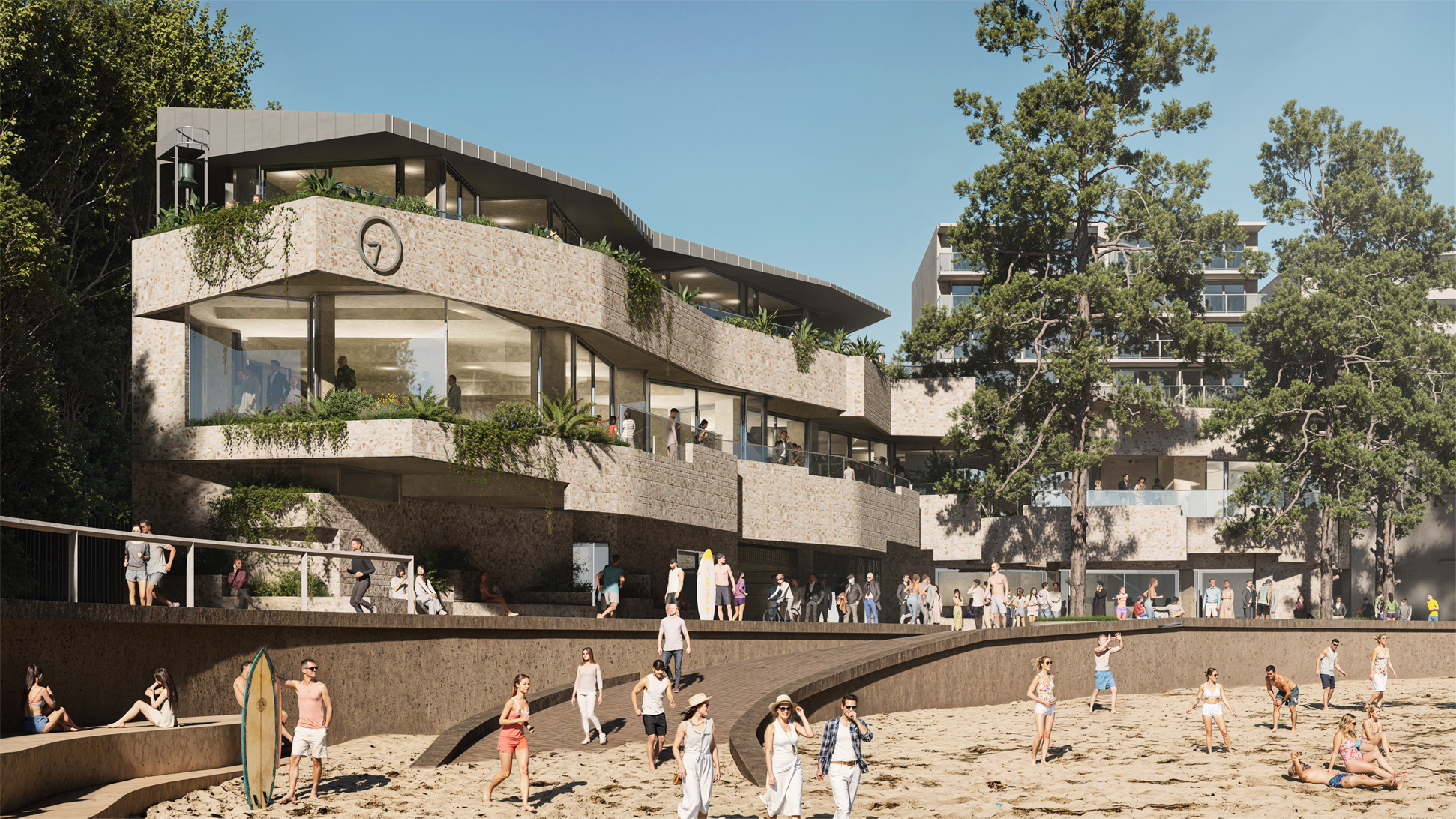
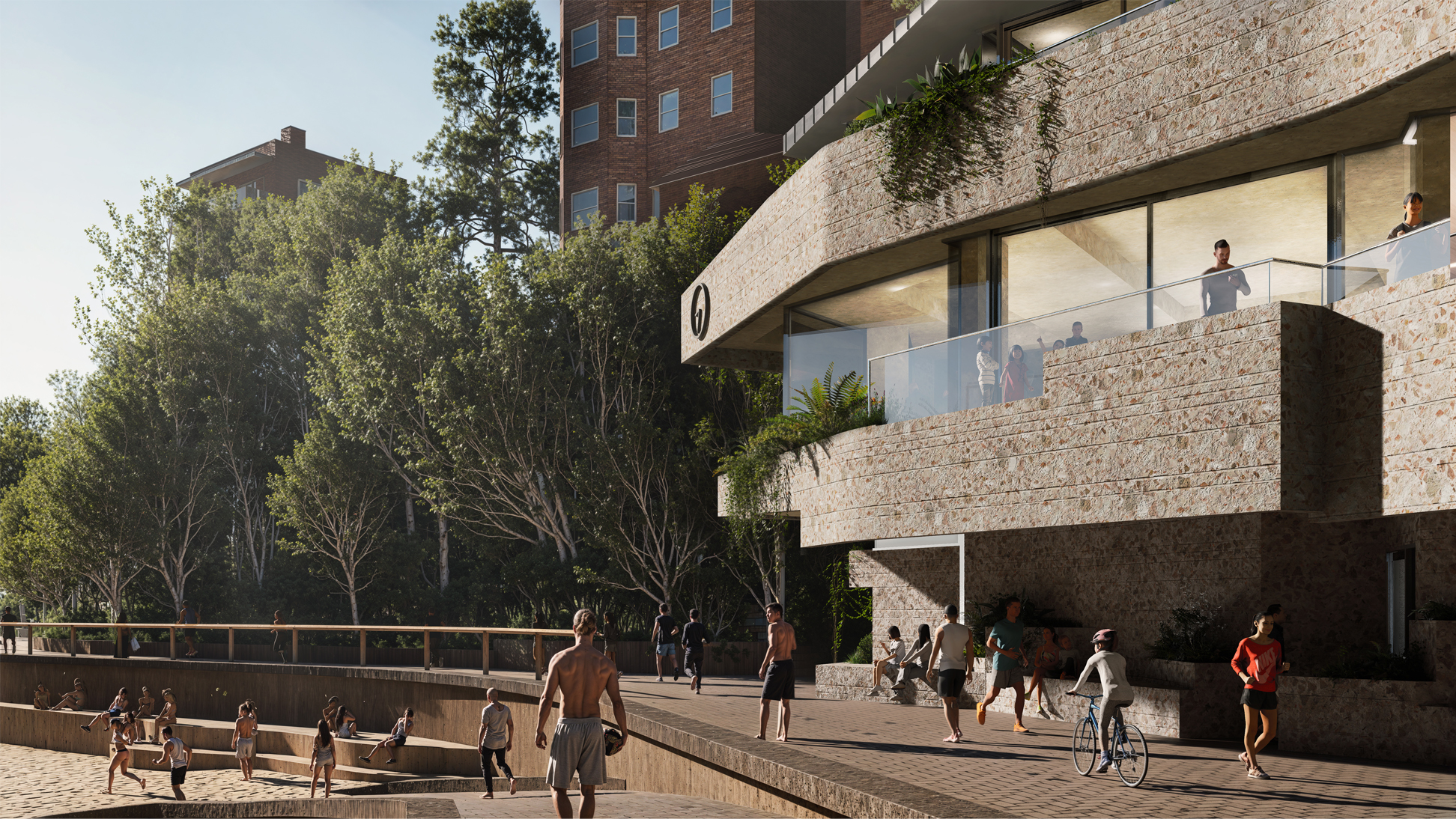
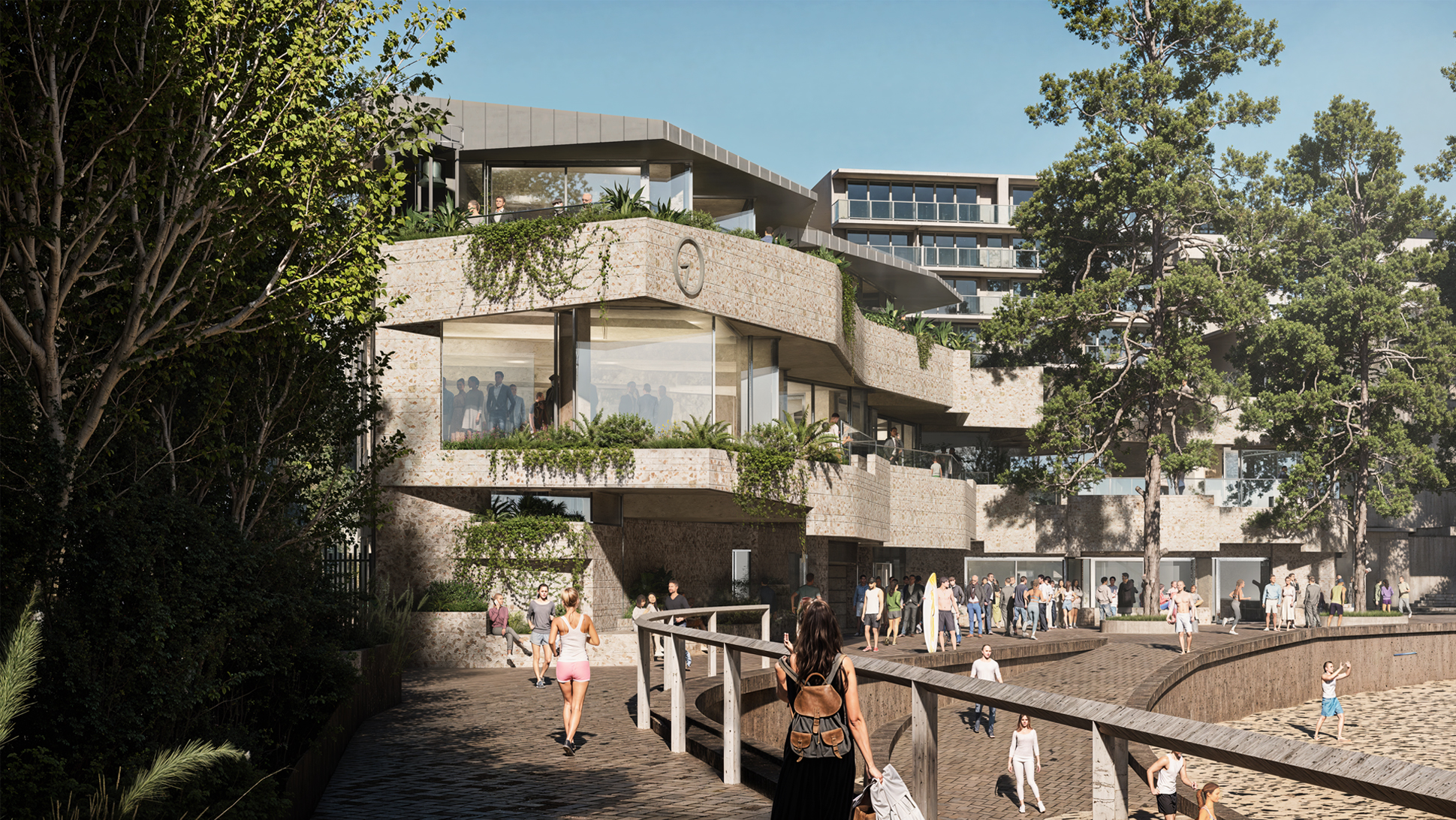
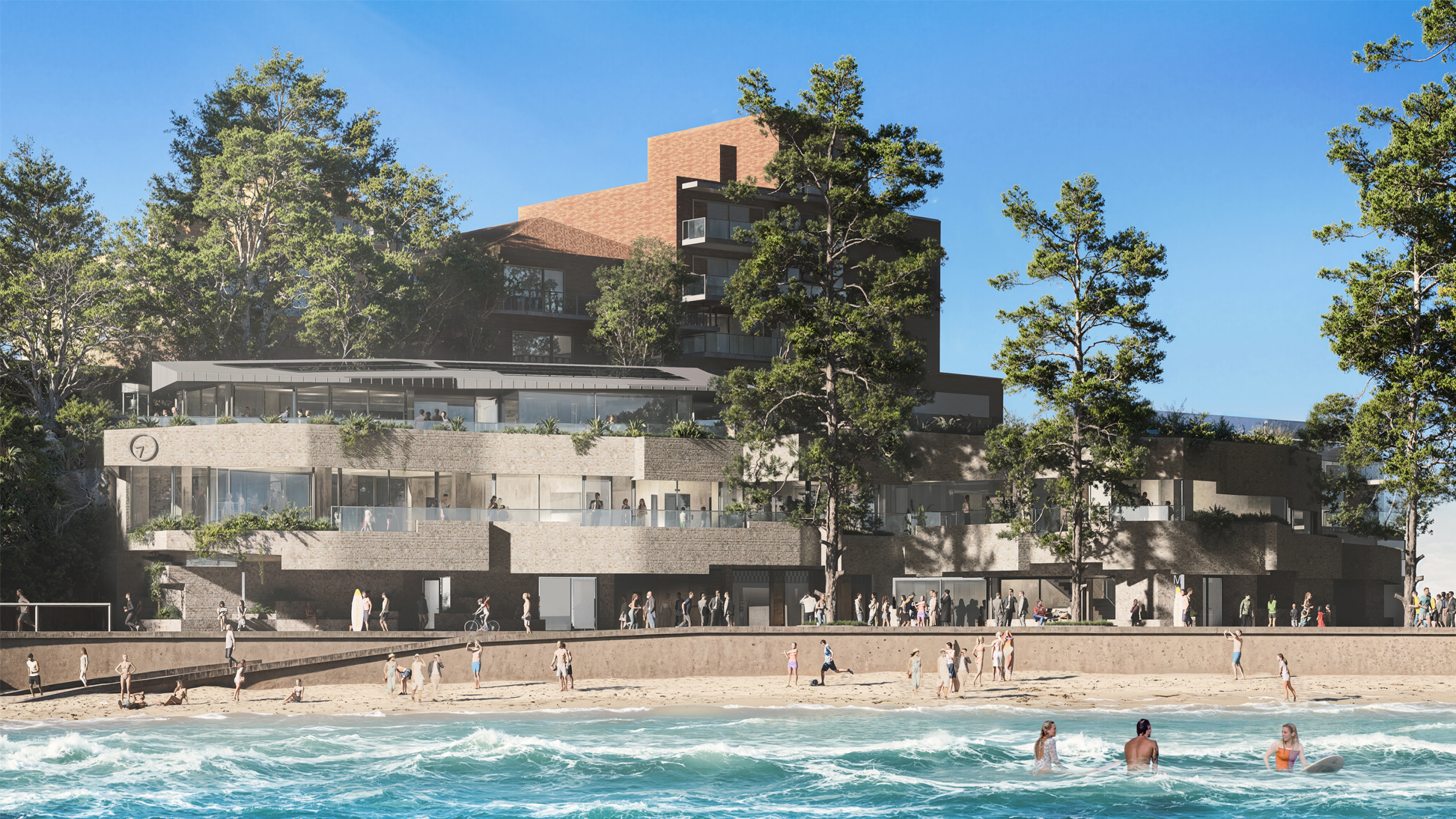
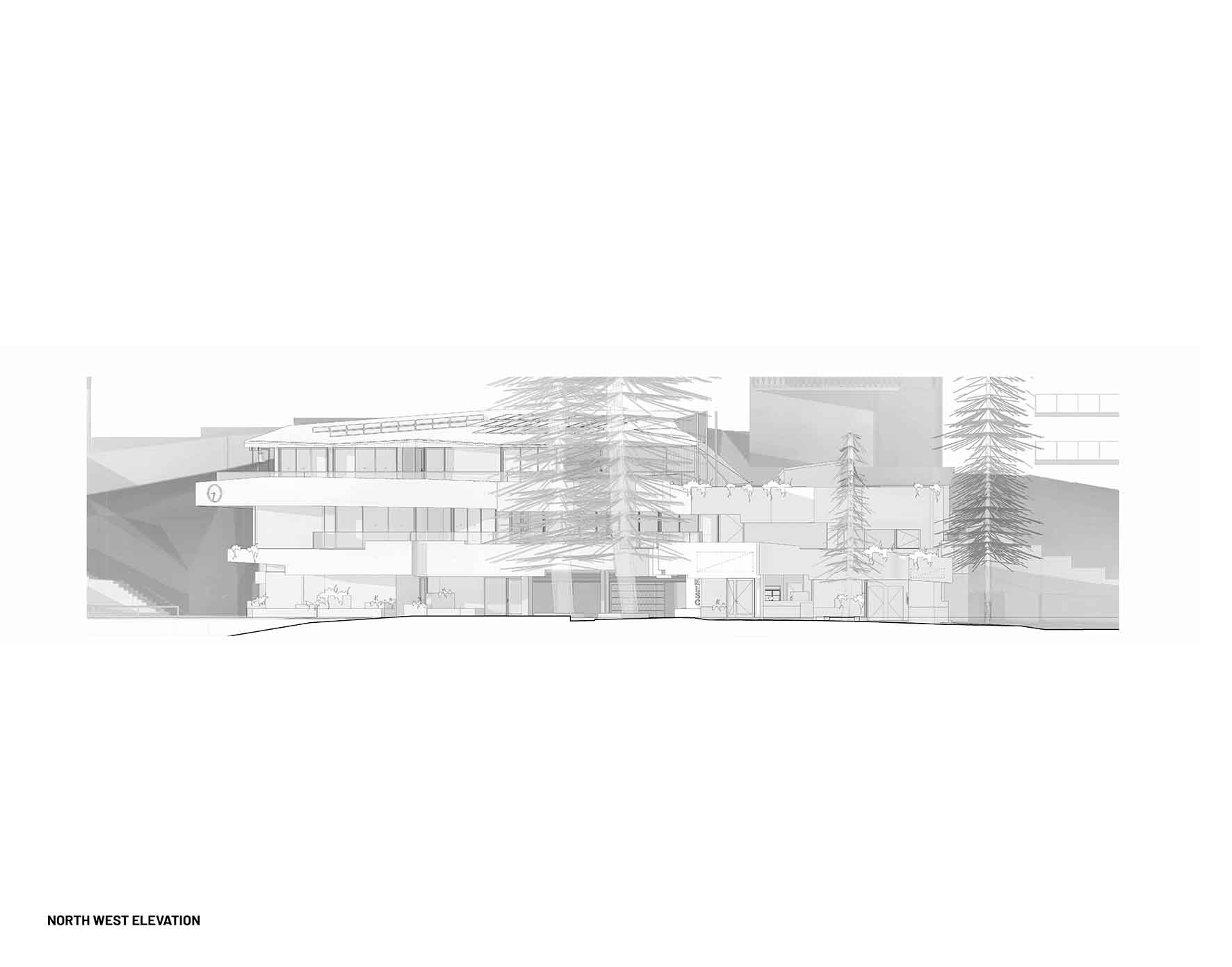
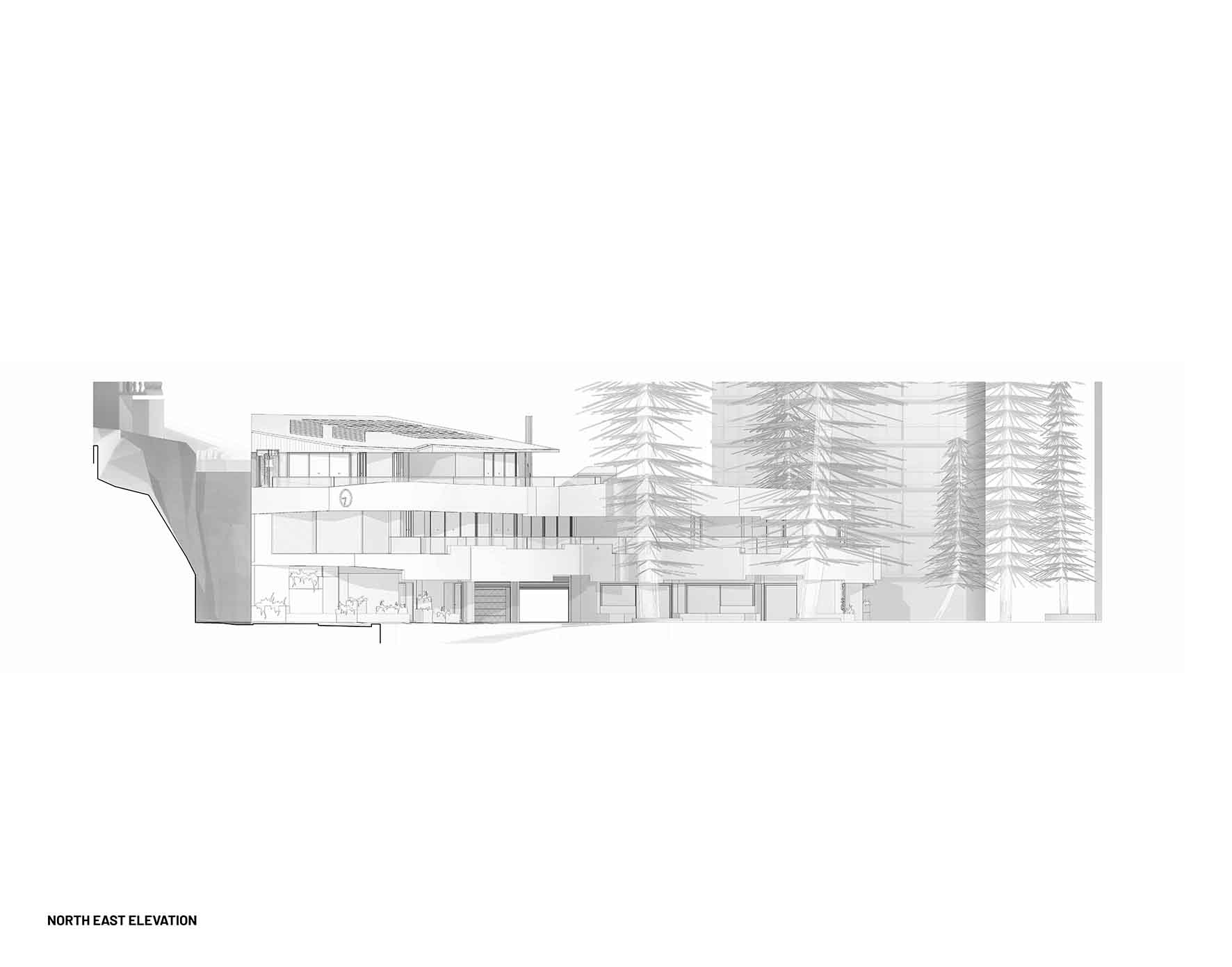
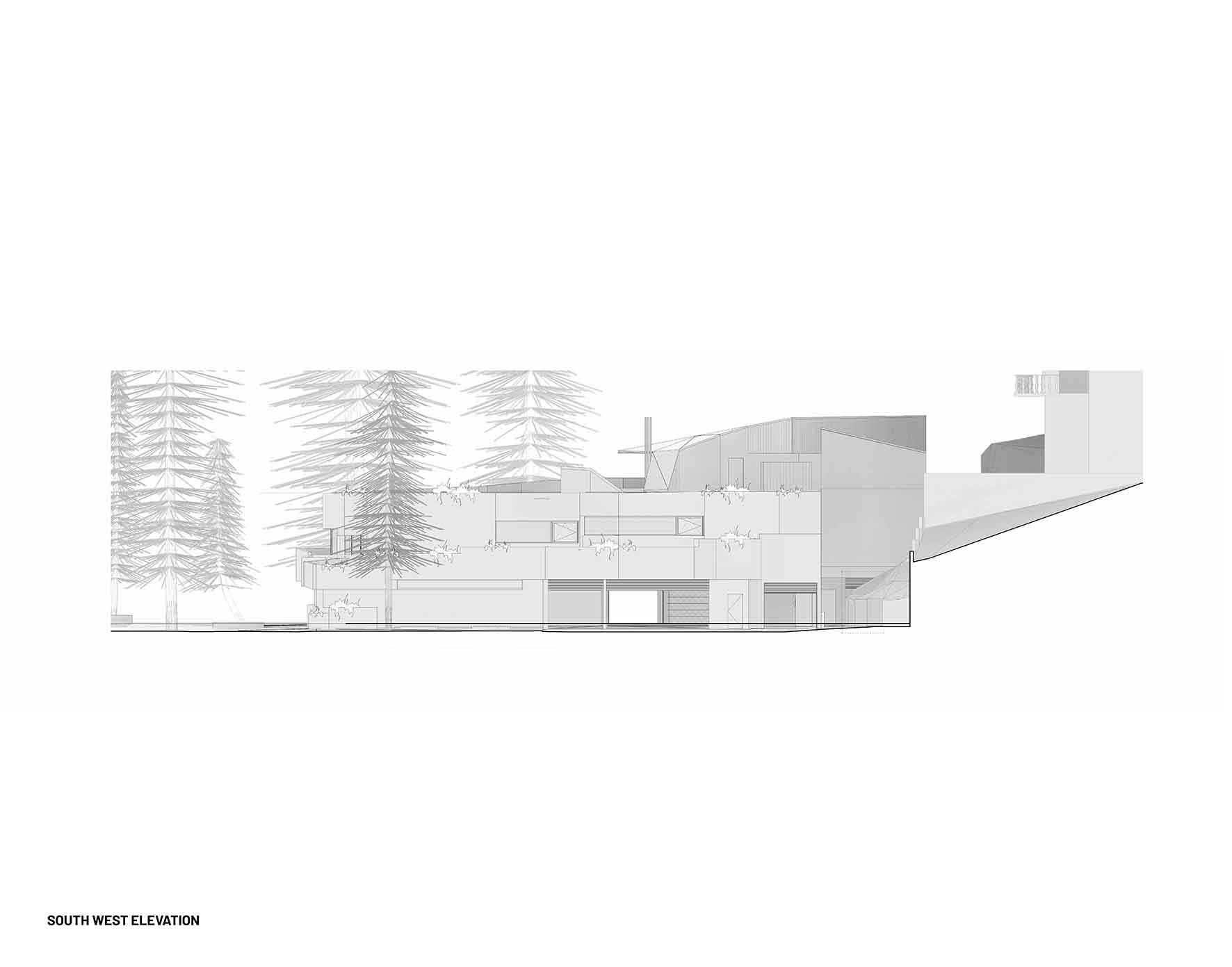
Our proposal is for a building that attaches itself to the cliff face, as much part of the landscape as the city adjacent. Form and materials recede, describing a laminate of the cliff face behind. While unobtrusive from a distance, the building has a complexity and vigour at close range which supports an array of beach and club life, in, on and against it.
- TYPE Public
- LOCATION MANLY | AU
- YEAR 2022-
APPROACH


The site for the surf club is on what was once a neck of land between the main coastline and a separate headland. Landscape changes and reclamations over time still find this site situated on a neck of land but adjacent to a highly urbanised area.
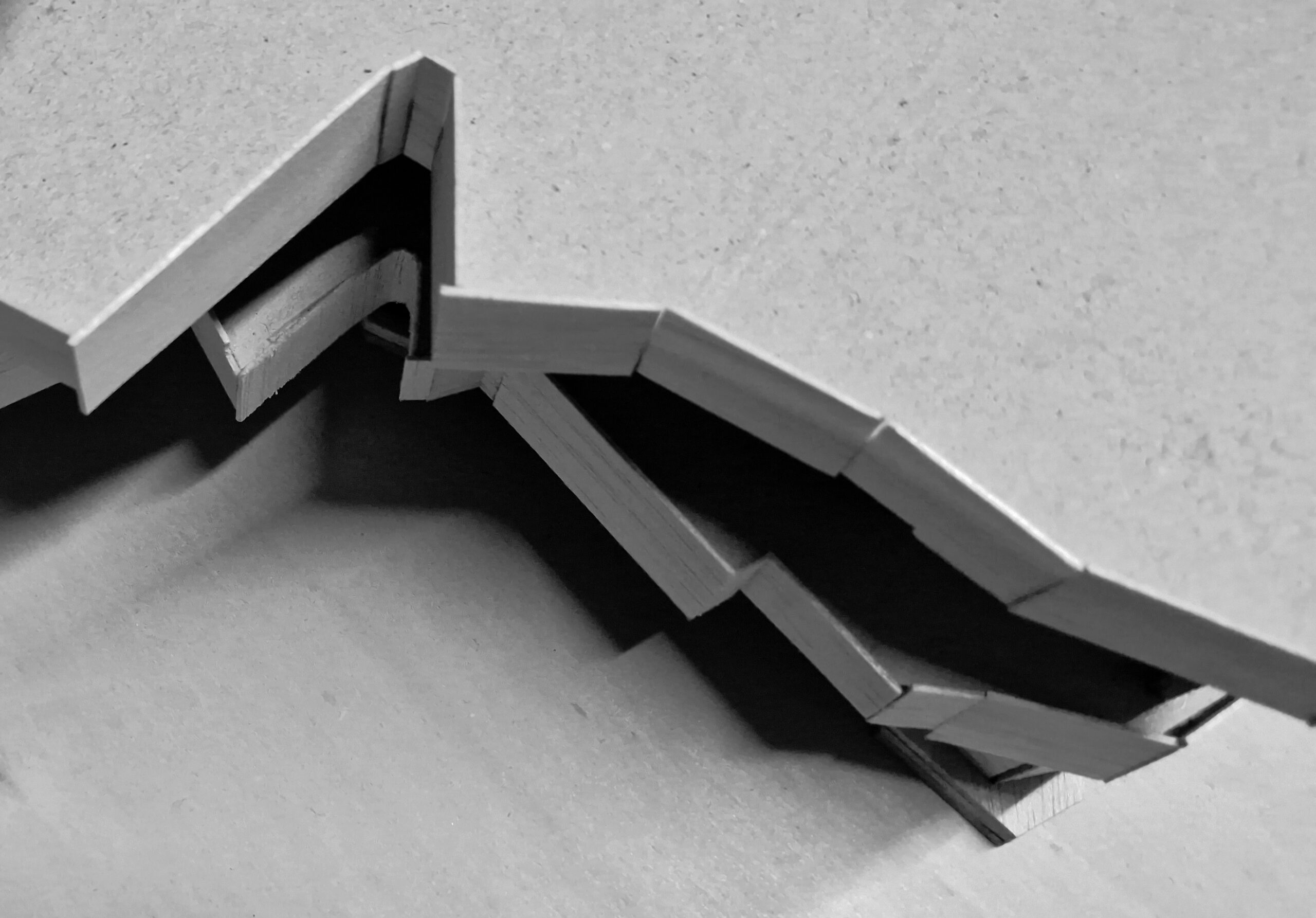
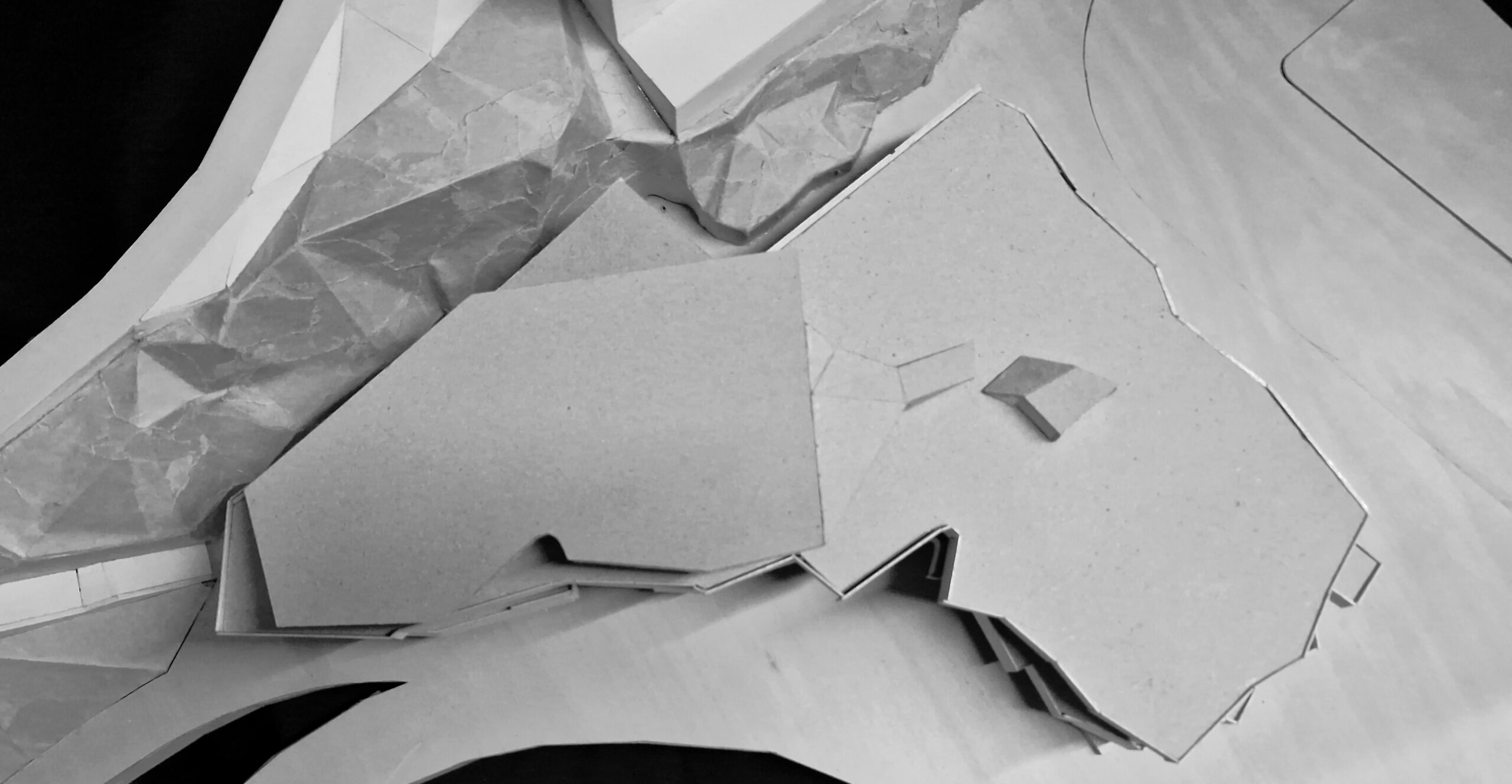
The design approach was founded in the desire to reconcile the poetics of the landscape setting with the complexities of the urban setting. A series of pedestrian and logistics flows give form to the main building footprint, with key functional areas (public amenities, reception, craft storage, function rooms, training rooms) arranged optimally within that footprint. The resultant form and volume is sculpted to further optimise view corridors while also creating a range of interstitial spaces to augment and extend the occupation of the public realm. Formally, this sculpting exercise also responds to the tectonic qualities of the cliff behind – horizontally striated stone that has been occupied by the inhabitants of the area well before colonisation. These qualities are reinterpreted here, distinguishing this project not as another building between city and sea but as an interstitial built landscape.
GALLERY
DRAWINGS
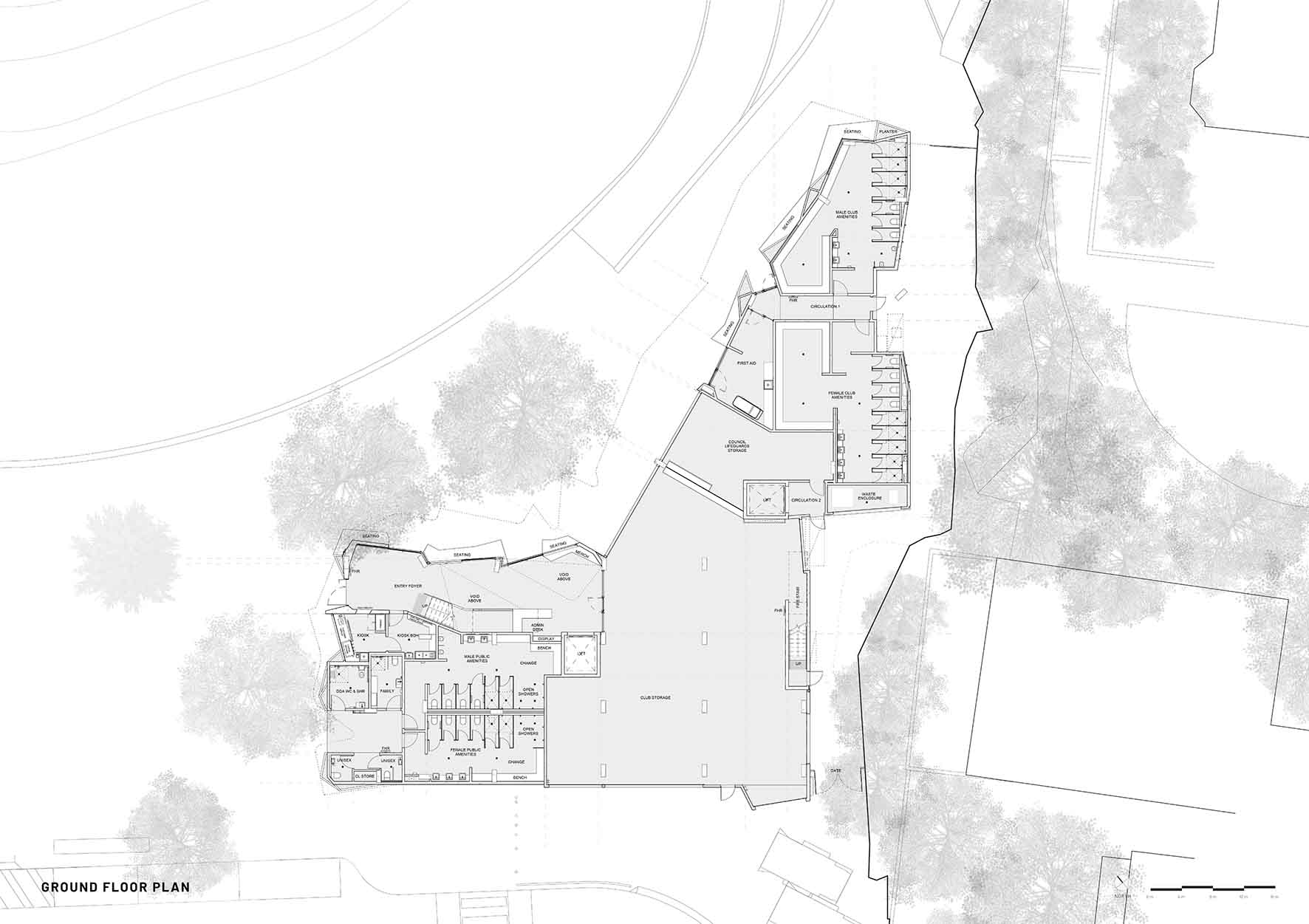
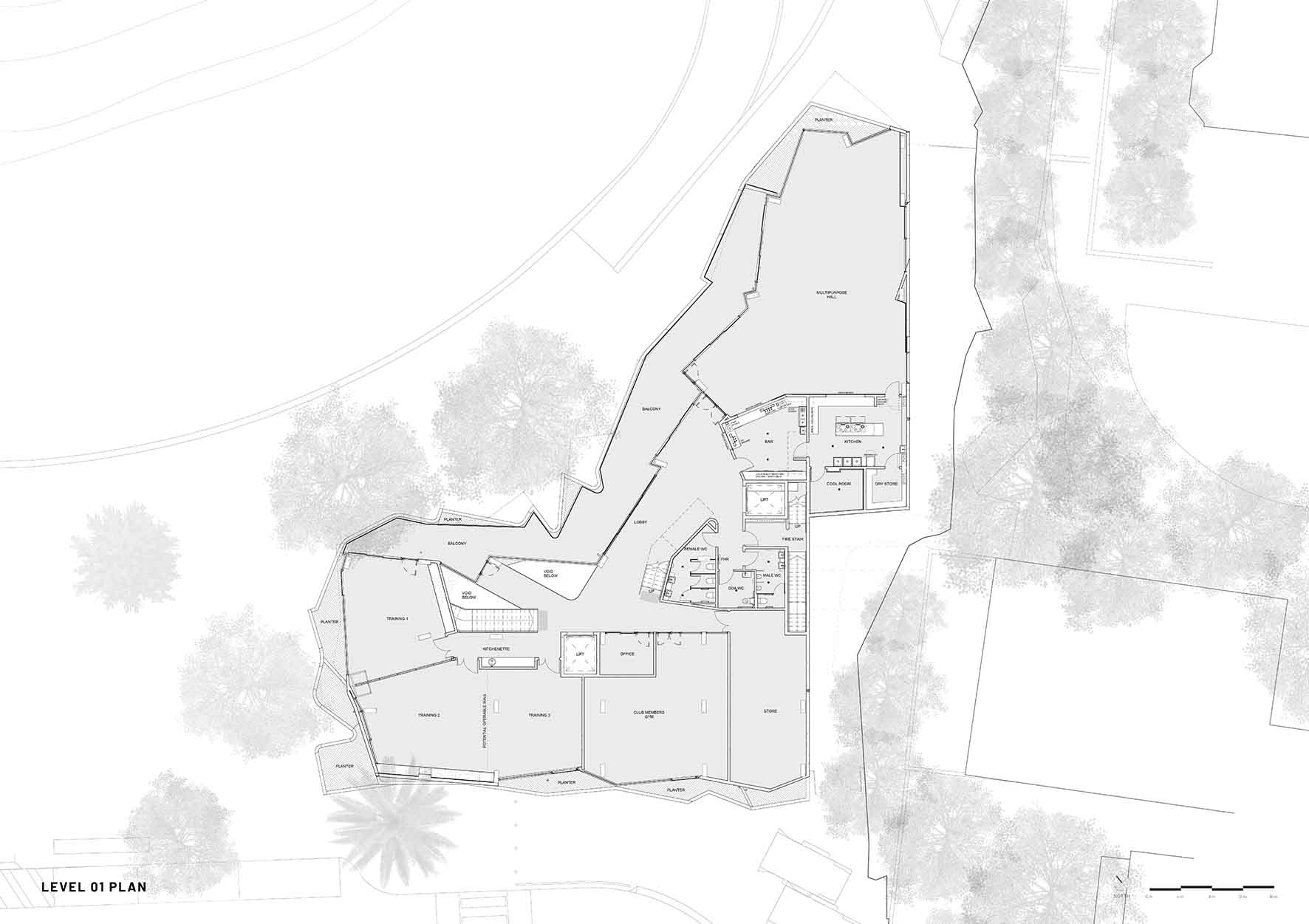
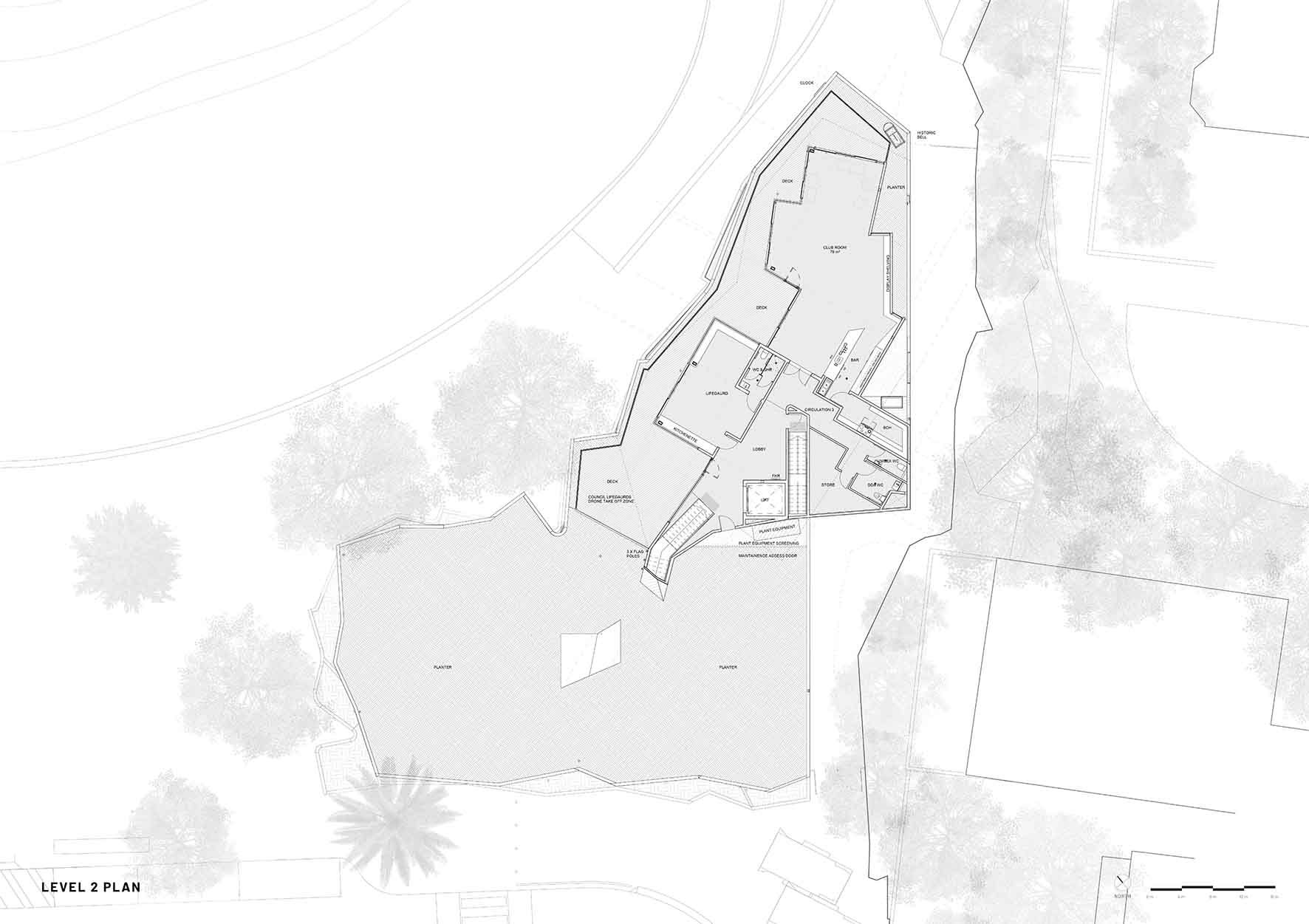
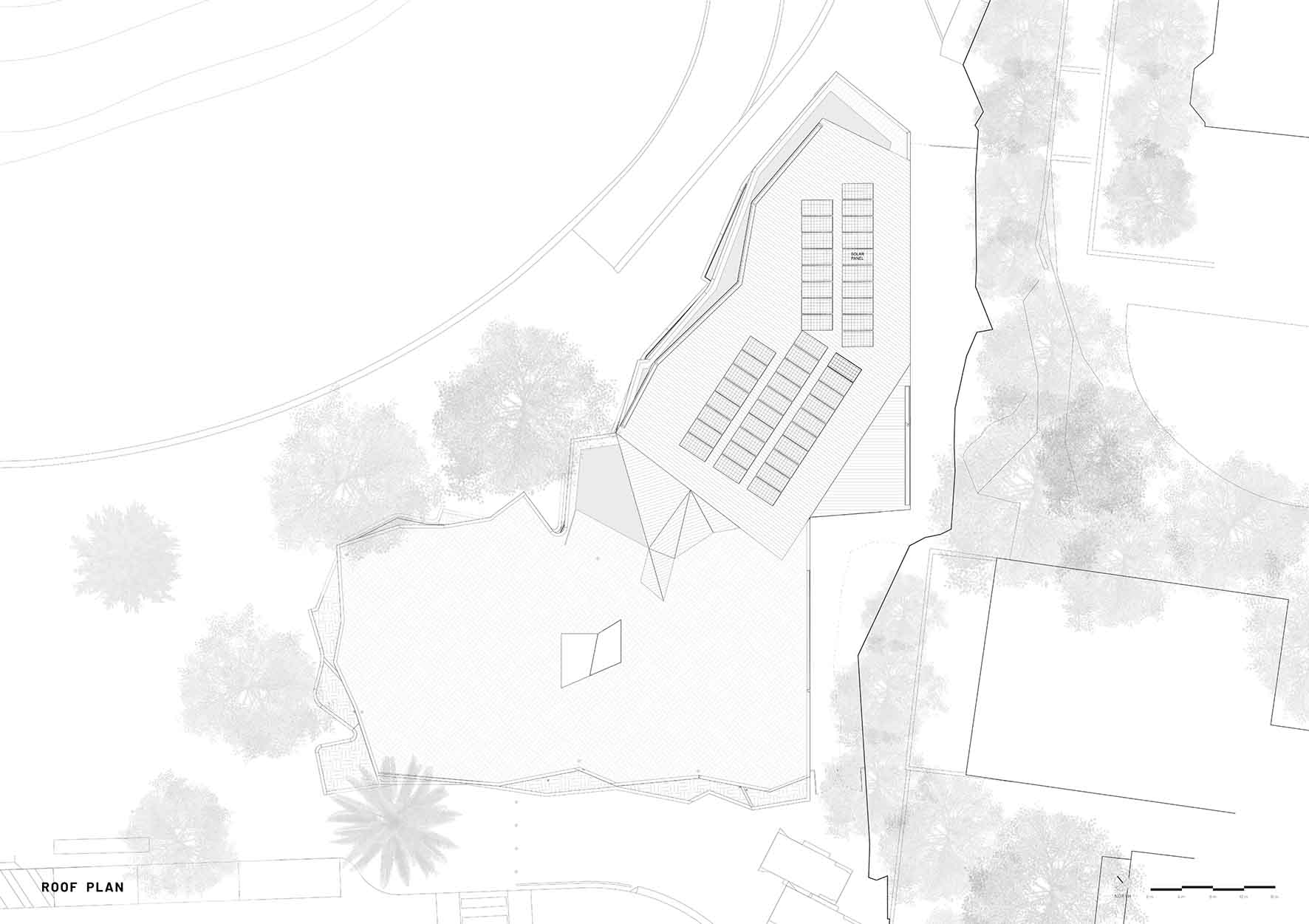
MODELS